Student Protests in France (October 12, 2026)
Fed-Up Students
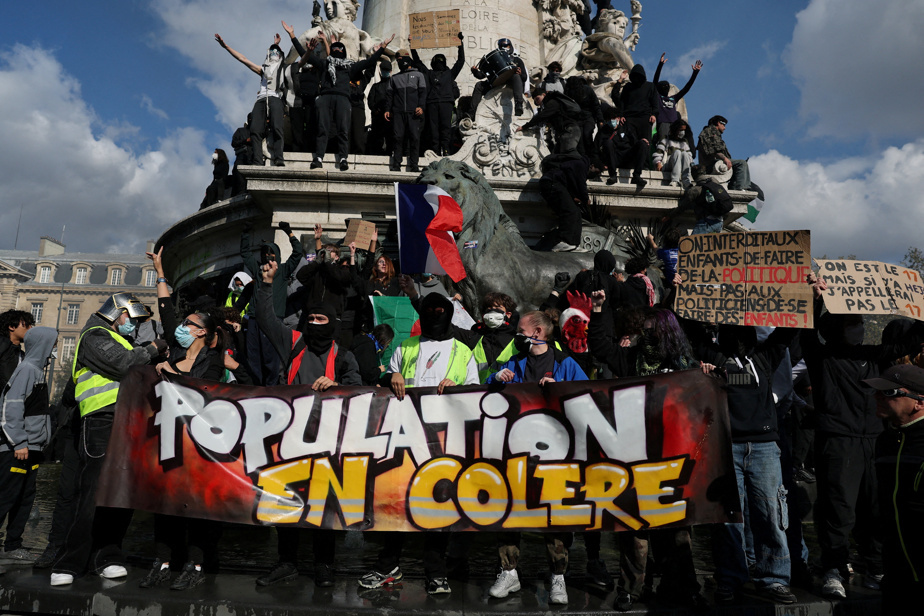
ℹ️ What? A major protest movement by high school students—joined by university students—who are blockading their schools and demonstrating in the streets to demand better learning conditions. 😤
👤 Who? French high school students—young people aged 15 to 18—who are speaking out against overcrowded classrooms, teacher shortages, and school buildings in poor condition. 😡
🌍 Where? In France: starting in the Paris suburbs, then spreading to hundreds of schools across the country, notably in Paris, Lille, Lyon, and Besançon.
🕰️ When? Since mid-September 2026, with several major days of demonstrations in October.
❓ Why is it important? Because hundreds of thousands of young people have united their voices to be heard, forcing the government to respond. 📢
🎯 For this activity, your goal is to learn a bit more about this high school student movement. 🪧
Your Goal Today!
All over the world, citizens sometimes take to the streets to make their voices heard.
This autumn, in France, young people—barely older than you—are doing just that.
Why are so many of them protesting? Where are these demonstrations taking place? And what would you change about your own school?
Throughout this activity, you will read, explore a map, and even come up with your own slogan!
🎯 For this activity, your goal is to learn a bit more about this high school student movement. 🪧
The activity has three steps:
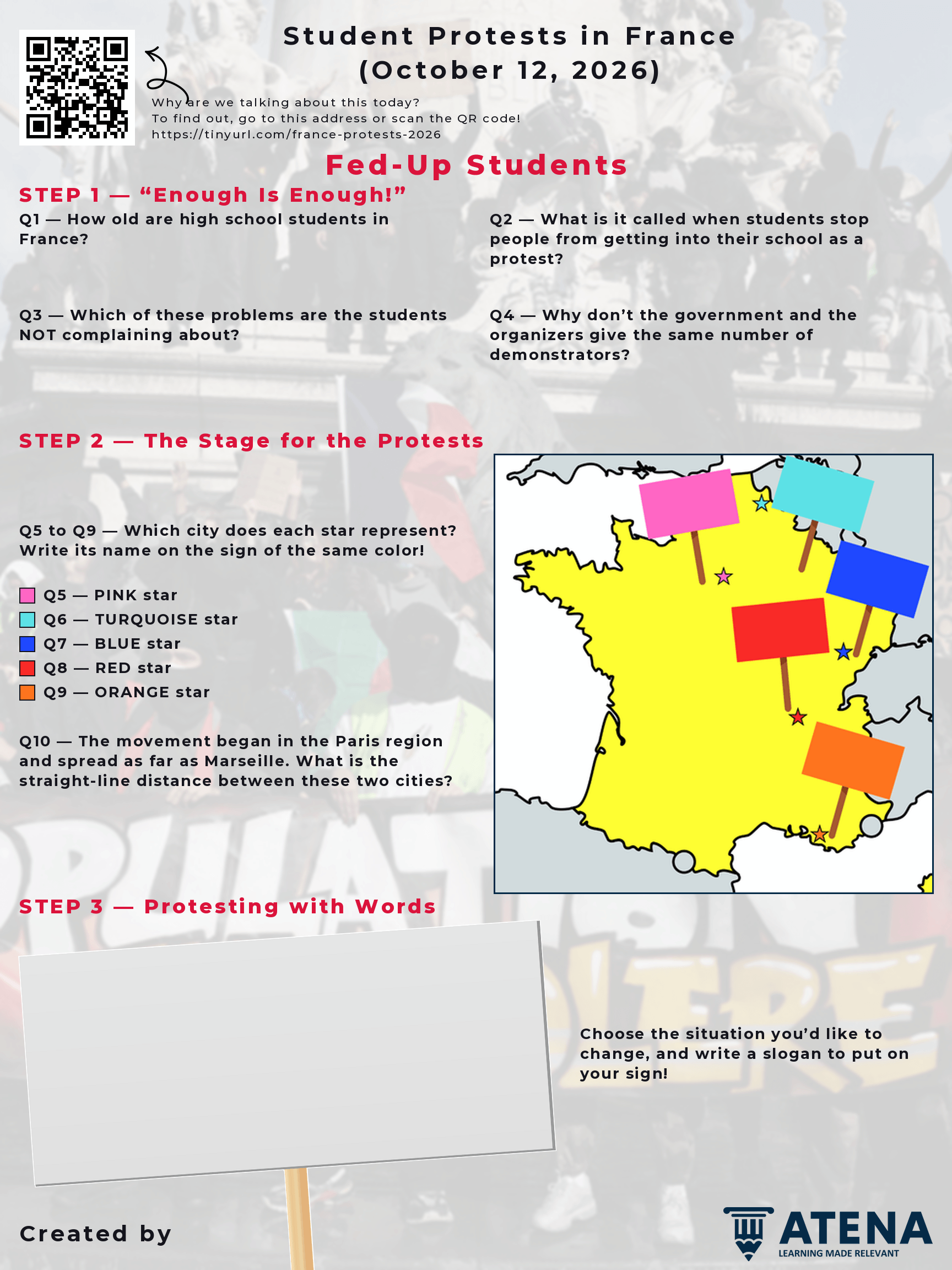
STEP 1 — "Enough Is Enough!" You will gain a better understanding of why high school students in France are protesting.
STEP 2 — The Stage for the Protests. You will explore France and locate the cities where the main demonstrations are taking place.
STEP 3 — Protesting with Words. You will come up with a slogan to draw attention to an issue at your own school!
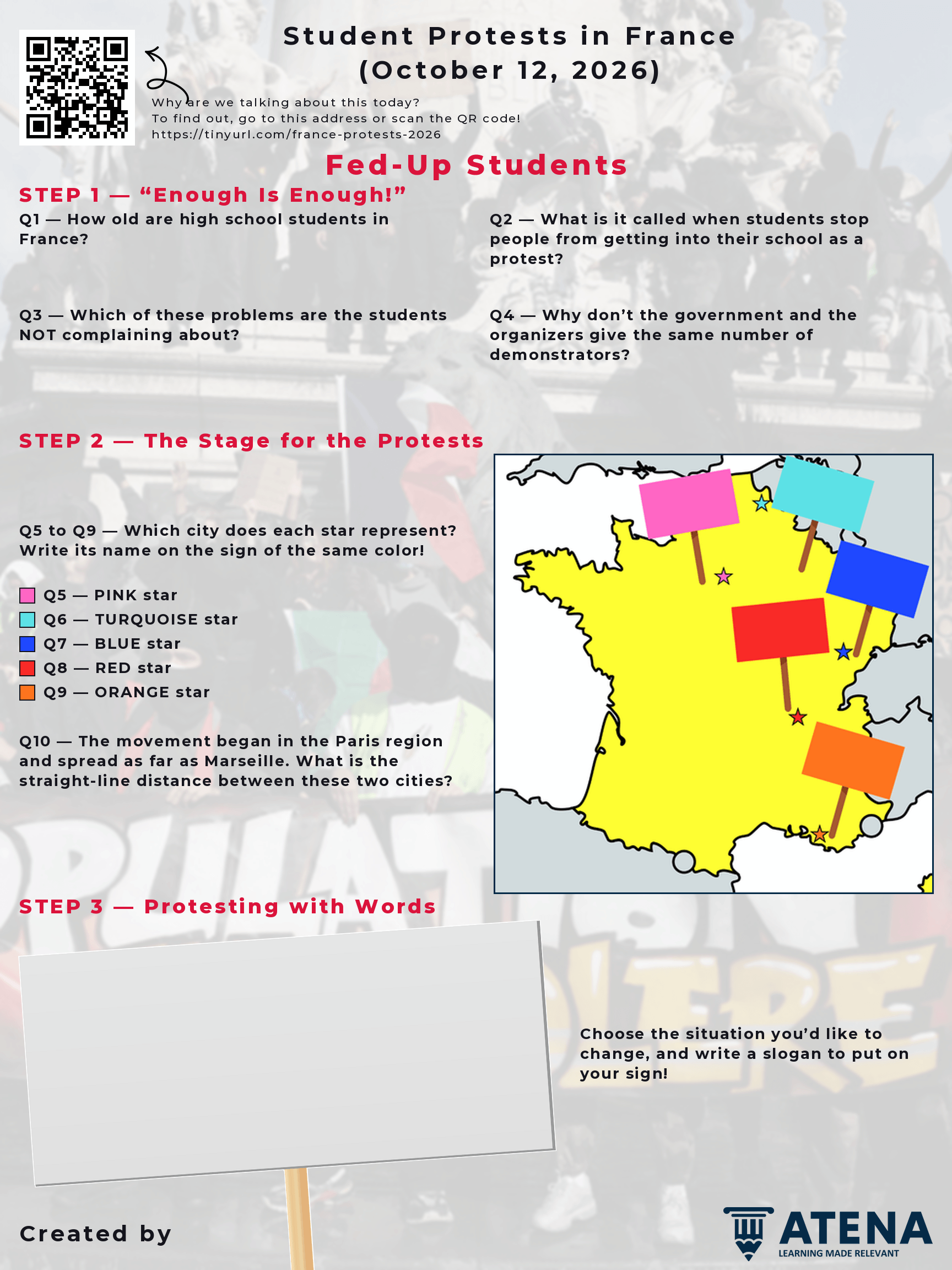
Here is what the final result of your activity will look like. →
Let's go! →
STEP 1 — "Enough Is Enough!"
Imagine arriving at school one morning to find the entrance blocked by other students. No classes today! ✊
This is what has been happening at hundreds of high schools across France over the past few weeks.
These young people aren’t doing this for fun—they want adults to listen to them...
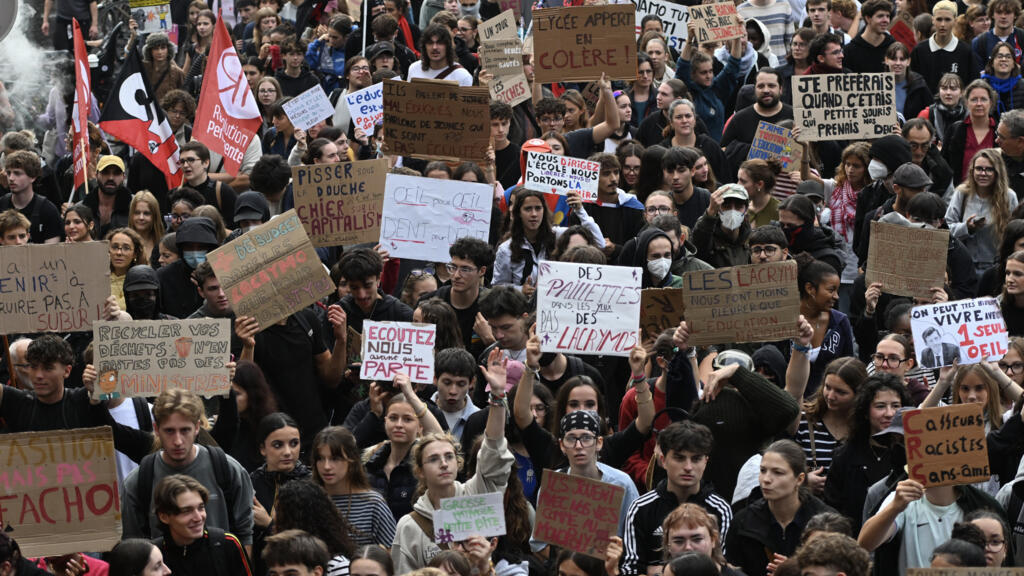
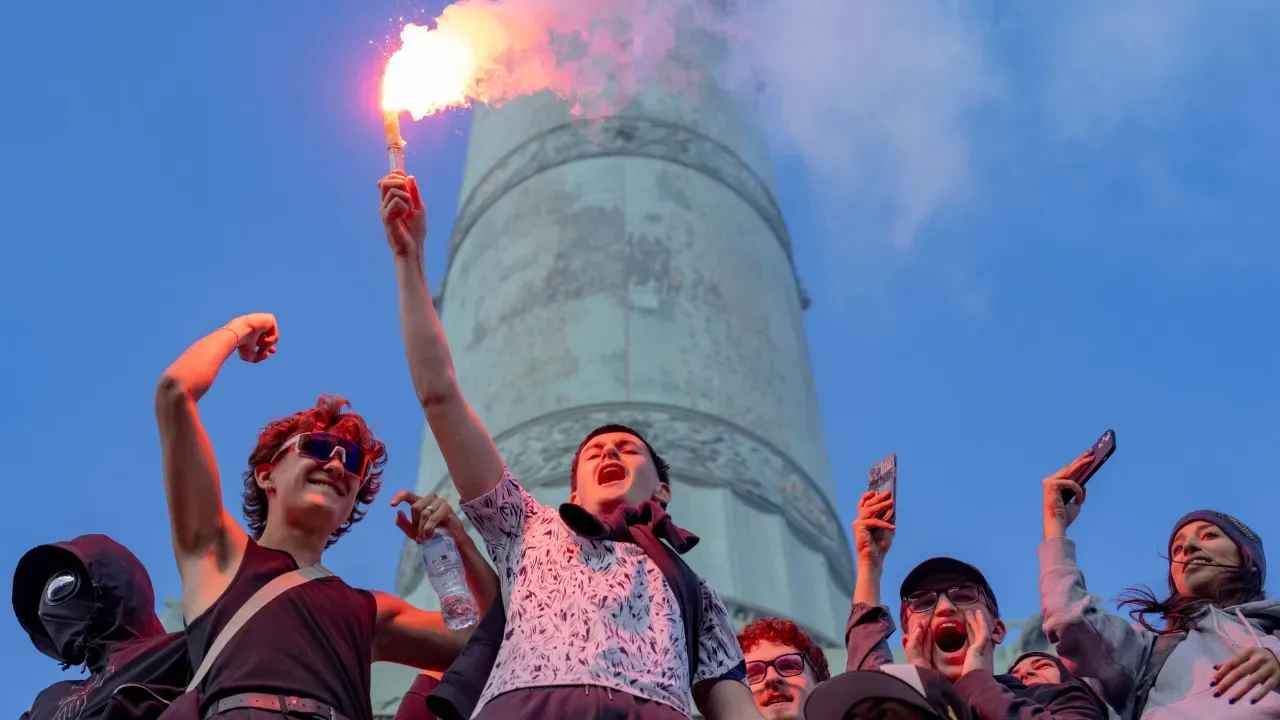
◄ Watch this report from France24, which explains the students' frustration and the demonstrations currently taking place in France.
▼ Next, read the text below and answer the multiple-choice questions. ▼
🪧 High School Students Take to the Streets! 😡
In France, young people aged 15 to 18 attend "lycée" (high school)—the final stage before higher education. Since mid-September 2026, thousands of high school students have decided to make their voices heard.
It all began in the Paris region, where students blocked the entrances to their high schools in protest. This is known as a "blockade." The idea quickly spread throughout the country. On Tuesday, October 6, nearly 900 schools were disrupted.
Why so much anger? The students are complaining about overcrowded classrooms, a shortage of teachers, and poorly maintained school buildings. They also feel their schedules are too demanding. Furthermore, many are critical of Parcoursup—the online platform used for selecting post-secondary studies.
University students, teachers, and parents have joined them in the streets. On October 6, more than 250,000 people took part in the demonstrations, according to the government—while organizers claim the figure was 450,000. These two numbers differ because each side uses its own method of counting!
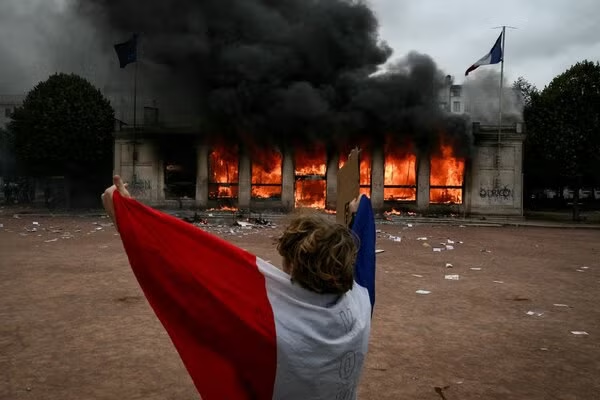
Most of the blockades are peaceful, but some demonstrations have turned violent. Student representatives met with the Minister of Education, but left disappointed. They are now demanding a meeting with the Prime Minister. The movement has even inspired demonstrations in a neighboring country, Belgium.
Moving on to STEP 2! →
STEP 2 — The Stage for the Protests
The high school student movement did not stay confined to Paris.
In just a few days, students from all over France blocked their high schools and took to the streets, from the north to the south of the country.
Big cities became real stages for their anger!
But how well do you know these cities? Could you locate them on a map?
Open Google Earth and set off to explore this large European country.

◄ Go to Google Earth and find the locations of these cities on the map by entering their names into the SEARCH BOX. You will also need the RULER tool 📏 for question 10!

The cities to find are (in alphabetical order):
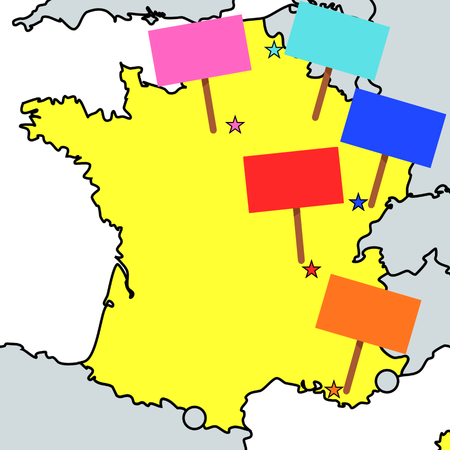
BESANÇON — LILLE — LYON — MARSEILLE — PARIS
Moving on to STEP 3! →
STEP 3 — Protesting with Words
In almost every photo of a protest, you see the same thing: signs!
Students write short phrases—called slogans—on them to speak out loudly about what’s wrong.
A good slogan is short, easy to remember, and makes people want to repeat it.
Often, it uses rhymes or plays on words, just like in the picture! ►
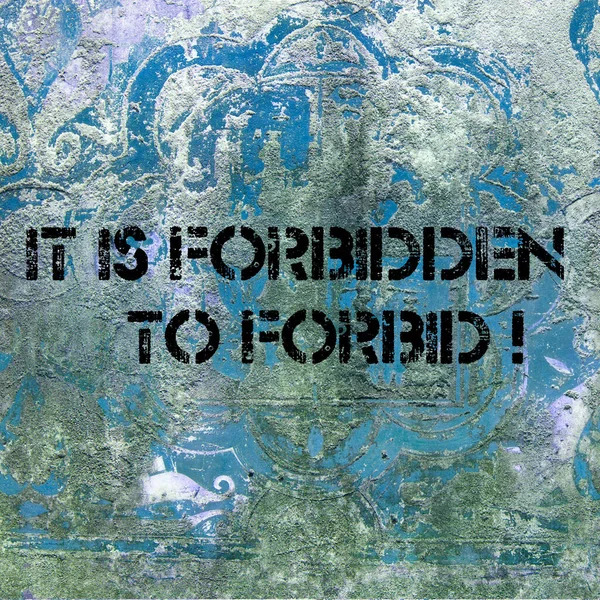
Here are three situations at school that could be improved. Choose the one you’d like to change, and write a slogan to put on your sign!
🚽 The school restrooms are often dirty, and there’s never any soap.
⏰ Recess only lasts 10 minutes—not enough time to play!
📚 The library books are old and worn out.

You have completed the activity! →